



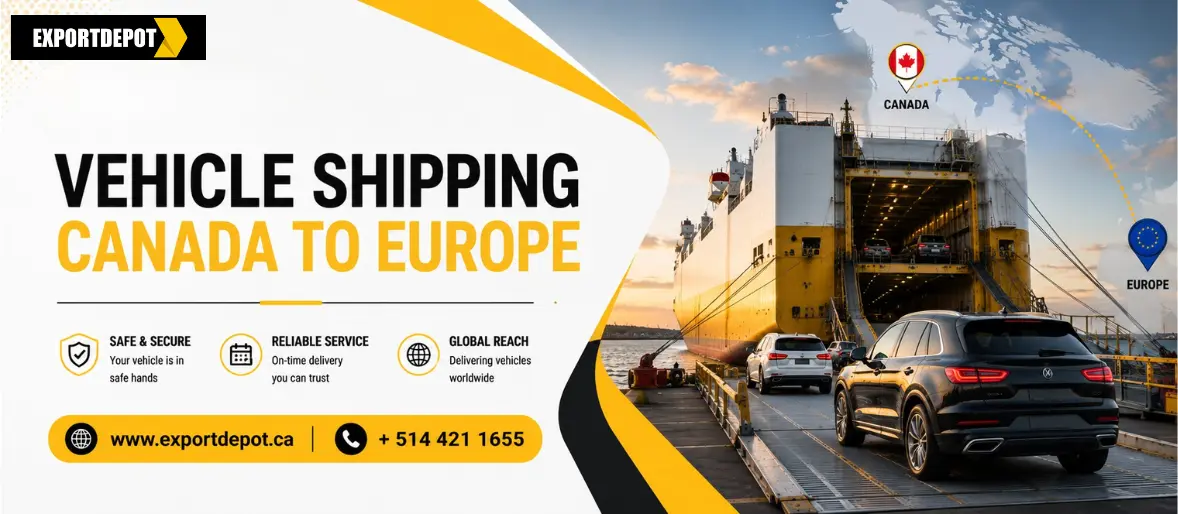
Can You Pack Personal Items Inside Your Car During Vehicle Shipping Canada to Europe?
Packing personal items during vehicle shipping is possible. But strict rules apply depending on the shipping method used. RoRo shipping prohibits personal items inside vehicles entirely. Container shipping allows limited personal belongings under specific conditions. Understanding these rules before vehicle shipping Canada to Europe prevents costly customs problems on arrival.
Introduction
International relocation raises a natural question for most people moving abroad. The car is going anyway, why not fill it with belongings? It seems like an efficient, cost-saving approach on the surface.
In practice, the rules governing vehicle shipping in Canada are cost-saving. What is allowed depends entirely on the shipping method chosen. It also depends on customs regulations at the destination country.
Getting this wrong leads to delayed vehicles, fines, and confiscated goods. This guide covers exactly what is permitted, what is prohibited, and why. It also explains how affordable long distance moving containers compare for personal effects.
RoRo vs Container: What Is the Cheapest Long-Distance
| Factor | RoRo Shipping | Container Shipping |
| Personal Items Allowed | Strictly prohibited | Allowed with full declaration |
| Customs Manifest Required | Vehicle only | Vehicle plus itemized goods list |
| Fragile Items Inside Vehicle | Not permitted | Permitted if properly secured |
| Moving Goods Alongside | Separate shipment required | Can share same container |
| Recommended For | Standard vehicles only | Vehicles with household goods |
| Prohibited Items | All personal effects | Food, alcohol, weapons, flammables |
RoRo or Container: The Rule Difference Is Significant
The shipping method determines everything about what can go inside a vehicle. Two methods handle most vehicle shipping Canada to Europe routes. Roll-on/Roll-off (RoRo) shipping and container shipping operate under very different rules.
RoRo vessels carry vehicles on open decks with no enclosed storage. Personal items left inside a RoRo-shipped vehicle are strictly prohibited. Terminals inspect vehicles before RoRo loading and remove any items found. Items removed at the terminal are rarely recovered without significant effort.
Container shipping places vehicles inside an enclosed steel container. This method allows limited personal items inside the vehicle under certain conditions. The container itself can also carry additional boxes and household goods.
What Items Are Actually Allowed in Container Shipping?
Container shipping offers greater flexibility for personal belongings during relocation. Most Montreal moving companies offer greater container shipping for vehicle and household moves. Personal items packed inside the vehicle must be declared on the customs manifest.
Undeclared items discovered at the destination create serious customs complications. Clothing, books, and non-restricted household items are generally permitted. These must be itemized and listed on a detailed packing inventory. The inventory accompanies the customs declaration for the destination country.
European customs authorities require an accurate itemized list for all goods. Items not on the list are treated as undeclared imports at the border. Undeclared imports are subject to seizure, duty assessment, and potential fines.
Items That Are Prohibited No Matter What Method You Use
Shipping carriers prohibit certain categories of items regardless of the shipping method. Food products of any kind cannot be transported in a shipped vehicle. Import authorities restrict alcohol and tobacco and impose import limits, while they completely prohibit firearms, ammunition, and weapons.
Shipping authorities never permit flammable liquids, aerosols, or pressurized containers inside vehicles. Prescription medications in large quantities require additional documentation to cross borders. Agricultural import authorities typically prohibit the importation of plants, soil, and organic materials.
High-value items: Agricultural import rules typically prohibit the importation of organic materials. You should ship these items separately with appropriate declared-value insurance coverage. Personal documents and irreplaceable items should always travel with you personally.
Vehicle Shipping Canada to Europe: European Customs Rules
European customs authorities treat personal items inside vehicles as imported goods. Each item is subject to the destination country’s import duty rules. EU member states follow shared customs regulations for goods entering from Canada.
Goods imported as part of a household relocation may qualify for duty relief. This relief applies when the owner is permanently relocating to that country. You must provide proof of permanent relocation to claim the household goods exemption. A residence permit, employment contract, or visa documentation typically satisfies this requirement.
Temporary visitors cannot claim household goods exemption on imported personal effects. Failing to declare items accurately creates liability at the port of entry. Customs officers can hold vehicles until all items are cleared.
Why Personal Items Inside a Vehicle Create Physical Risks Too?
Personal items add weight to a vehicle during ocean transit. Excess weight affects how the vehicle sits on the vessel. RoRo vessel operators weigh vehicles before accepting them for loading. Container shipping also has weight limits per container that must be respected.
Heavy items like tools, equipment, and furniture strain vehicle suspension during transit. Loose items and heavy items can shift inside the vehicle during rough ocean conditions. Shifting items can scratch interiors, crack dashboards, and damage upholstery.
Boxes stacked inside vehicles can fall and damage the windshield or seats. All items placed inside a containerized vehicle should be secured before loading. Fragile items risk breakage when packed loose inside a shipped car.
Why Long-Distance Moving Containers Are a Smarter Way?
Many relocating families find affordable long-distance moving containers a smarter solution. A shared LCL container completely separates the vehicle. This approach significantly simplifies customs clearance at the European destination. Vehicles and household goods undergo different customs clearance processes.
Combining them inside one vehicle creates documentation complexity that slows clearance. Cheapest long distance moving containers allow full packing of household items properly. You can safely secure items for the ocean journey to protect your property from shifting inside the moving vehicle.
LCL consolidation services through moving companies in Montreal offer cost-efficient shared container options. This is ideal for families relocating without a full container’s worth of goods.
Practical Tips for Packing During International Vehicle Relocation
- Choose container shipping if you plan to include any personal items.
- Prepare a complete itemized inventory of every item placed inside the vehicle.
- Never place personal items inside a shipped vehicle under any circumstances.
- Declare all personal effects accurately on the customs manifest without exception.
- Use affordable long-distance moving containers for household goods shipped separately.
- Secure all items inside the vehicle before closing the container doors.
- Keep high-value items, documents, and medications with you during travel.
- Confirm destination country rules with your Montreal moving company’s coordinator in advance.
How to Export the Vehicles and Personal Effects Together?
Vehicle shipping Canada to Europe involves more decisions than most people anticipate. Personal effects, customs rules, and shipping method selection all interact closely. Getting one element wrong creates problems that ripple across the entire move.
Export Depot International has managed international relocations from Montreal for over 30 years. Our team handles vehicle shipping Canada to Europe via RoRo and container methods. We also coordinate affordable long-distance moving containers for personal effects separately.
Our moving company in Montreal handles long-distance customs documentation for both shipments together. LCL consolidation services keep costs manageable for families without full container volume. Door-to-door delivery options cover everything from Montreal to the European destination address.
Contact Export Depot to plan your vehicle and household relocation today.

Related posts
Top 5 Reasons Container Storage Moving Companies Use LCL Consolidation for Global Shipping
In the world of global logistics, efficiency and cost reduction are everything.
Vehicle Shipping Canada to Europe: What Most Planners Forget
At first glance, shipping a vehicle worldwide seems easy enough. However, as you
Vehicle Shipping Canada to Europe: Pre-Export Inspections Explained Clearly
Vehicle shipping from Canada to Europe involves more than booking a vessel and l