



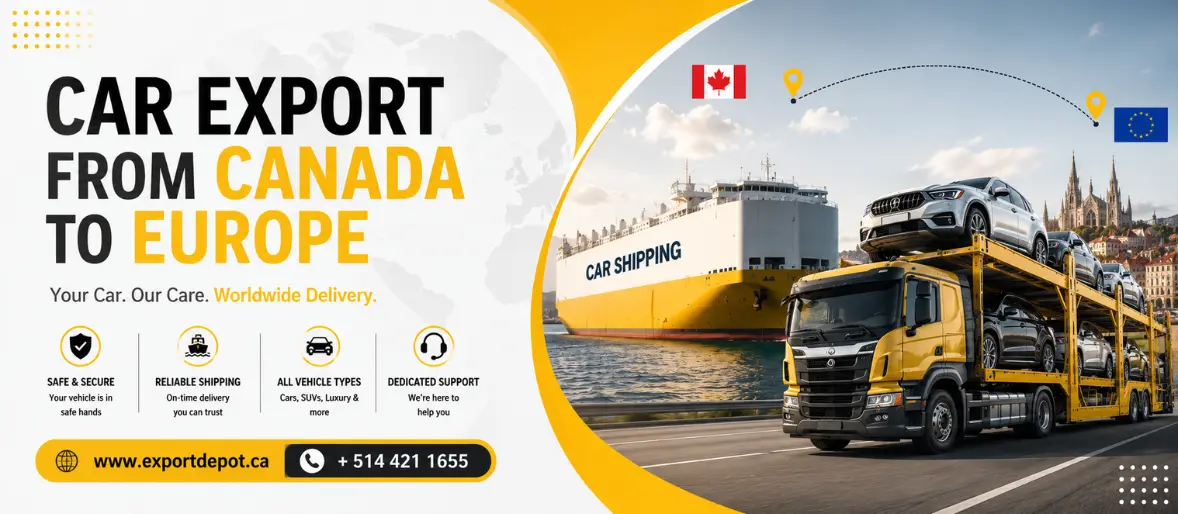
How to Safely Coordinate a Multi-Vehicle Car Export from Canada to Europe?
Coordinating a multi-vehicle car export requires careful planning. Container shipping, RoRo vessels, documentation, and customs compliance must all align. Timing each vehicle’s preparation and booking to a single freight schedule is critical. A qualified freight coordinator prevents the costly errors that derail multi-vehicle car export from Canada to Europe.
Introduction
Shipping one car internationally is already a detailed process. Shipping multiple vehicles to Europe simultaneously is a different level of complexity. Each vehicle needs its own documentation, condition report, and customs valuation. They also need to arrive at the terminal on a coordinated schedule.
A missed terminal deadline for one vehicle disrupts the entire shipment. Understanding how car exports from Canada to Europe work at a multi-vehicle scale matters. It helps exporters, dealers, and relocating families avoid costly mistakes. This guide walks through every stage of the coordination process.
Car Export from Canada to Europe: Safe Coordination Tips
Wrong Choice Costs More Than the Price Difference
The first decision in any multi-vehicle export is the shipping method. Two primary options exist: container shipping and Roll-on Roll-off vessels. RoRo shipping means vehicles are driven onto a specialized vessel. They are secured on open decks and driven off at the destination port.
RoRo is cost-efficient for standard vehicles and widely available to European ports. Container shipping places vehicles inside enclosed steel containers. This protects them from salt air, weather exposure, and open-deck handling. For luxury, vintage, or high-value vehicles, container shipping is the preferred choice.
Multiple smaller vehicles can share a single container to reduce per-unit cost. A freight coordinator confirms which method fits each vehicle in the shipment.
Tight Scheduling Is What Makes Multi-Vehicle Exports Work
Multi-vehicle exports demand tighter scheduling than single-vehicle shipments. Every vehicle must reach the terminal before the cargo cutoff deadline. Missing the cutoff for one car holds the entire booking at risk.
RoRo vessels have fixed sailing schedules that cannot be adjusted after booking. Container shipments require all vehicles to be loaded before the vessel departs. Coordinating pick-up, transport, and terminal delivery for multiple vehicles takes planning. Each vehicle may be coming from a different location across Canada.
A freight coordinator simultaneously tracks each vehicle’s movement toward the terminal. Building a two- to three-day buffer before the cutoff prevents last-minute problems. Seasonal vessel availability also significantly affects multi-vehicle scheduling.
Documentation Errors Are the Number One Delay Cause
Documentation errors are the leading cause of multi-vehicle export delays. Each vehicle’s shipping manifest requires its own set of paperwork. Required documents typically include the vehicle title and registration certificate. A bill of sale and valid government-issued photo ID are also required.
Some European countries require additional import permits for vehicles exceeding a specific value. Left-hand-drive compliance certification may be required for certain European destinations. Vehicle identification numbers must match exactly across all submitted documents. documents.
A single VIN mismatch triggers a customs hold that stops the shipment. Experienced freight coordinators review every document before cargo shipping begins. This prevents the holds and delays that cost exporters time and money.
Vehicle Preparation Requirements That Cannot Be Skipped
Every vehicle must meet specific preparation requirements before terminal acceptance. Fuel tanks must be reduced to one-quarter capacity or less. Batteries must be fully charged and in proper working condition. Alarms must be deactivated to prevent triggering during ocean transit.
Personal items left inside vehicles are not covered by cargo moving insurance. Loose items inside the vehicle can shift and cause internal damage at sea. A pre-shipment condition report clearly documents existing marks, scratches, and dents.
This report is the baseline if any damage claim arises after arrival. Photographs of each vehicle from all angles should be taken before loading. These records protect the exporter if disputes arise at the destination port.
Insuring Multiple Vehicles the Right Way
Standard shipping cars overseas coverage does not reflect the true value of vehicles. Weight-based insurance pays a fixed rate per kilogram of vehicle weight. A luxury vehicle worth $80,000 receives inadequate coverage under that formula.
Declared-value marine insurance covers each vehicle at its actual market value. Exporters must provide supporting documentation to justify the declared value. Purchase receipts, appraisals, or dealership invoices support declared-value claims.
Multi-vehicle shipments should carry individual declared-value coverage per vehicle. One policy covering the total does not protect each vehicle individually. Confirm insurance terms with your freight coordinator before any vehicle is loaded.
Understanding European Customs Before Your Cars Arrive
European customs requirements vary by destination country and vehicle origin. Importing vehicles into EU countries from Canada involves assessing import duties. EU import duties on passenger vehicles range from 6% to 10%. VAT is applied on top of the customs duty at the destination.
Vehicles manufactured in Canada may qualify for reduced duty under trade agreements. Proof of Canadian origin must be submitted with the cargo file. Temporary import permits are available for vehicles staying fewer than twelve months. These are common for expatriates relocating temporarily rather than permanently.
Customs documentation for multi-vehicle exports must be prepared vehicle by vehicle. A combined customs declaration covering multiple vehicles creates clearance complications.
Montreal as the Ideal Departure Point for Europe
Montreal is the primary departure port for car export from Canada to Europe. Direct services connect Montreal to ports in France, Germany, Belgium, and the UK. Antwerp, Le Havre, Southampton, and Bremerhaven are common European ports of arrival.
Transit times from Montreal to European ports average three to five weeks. Vessel schedules from Montreal follow fixed weekly or biweekly departure windows. Multi-vehicle exporters should book at least 6 weeks before the target sailing date. This allows time for document preparation, vehicle delivery, and terminal processing.
Winter months on the St. Lawrence Seaway may affect vessel scheduling and availability. A freight coordinator confirms departure port options based on destination and budget.
Export Depot Handle Multi-Vehicle Exports
Multi-vehicle car exports from Canada to Europe require end-to-end coordination. One delayed vehicle affects every other car in the shipment. Export Depot International has managed complex vehicle shipments for over 30 years.
Our team coordinates car export from Canada to Europe for private and commercial clients. RoRo and container shipping options are both available through their Montreal office. We handle document preparation, customs compliance, and terminal scheduling simultaneously.
Declared-value insurance coordination is included in the full-service process. Our team tracks each vehicle individually from pick-up through to European port arrival. Shipping cars overseas to France, Germany, Belgium, the UK, and beyond is our specialty. Contact Export Depot to request a multi-vehicle shipping quote today.

Related posts
How Shipping Methods Work for Car Export from Canada to Europe?
Exporting vehicles internationally requires planning, precision, and the correct

The Practical Blueprint for Hassle-Free Car Export from Canada to Europe
Moving a personal vehicle across the Atlantic Ocean sounds like a massive logist
How to Protect Your Belongings During International Moving and Storage?
Moving a car across provinces or borders can be intimidating, whether you are re