



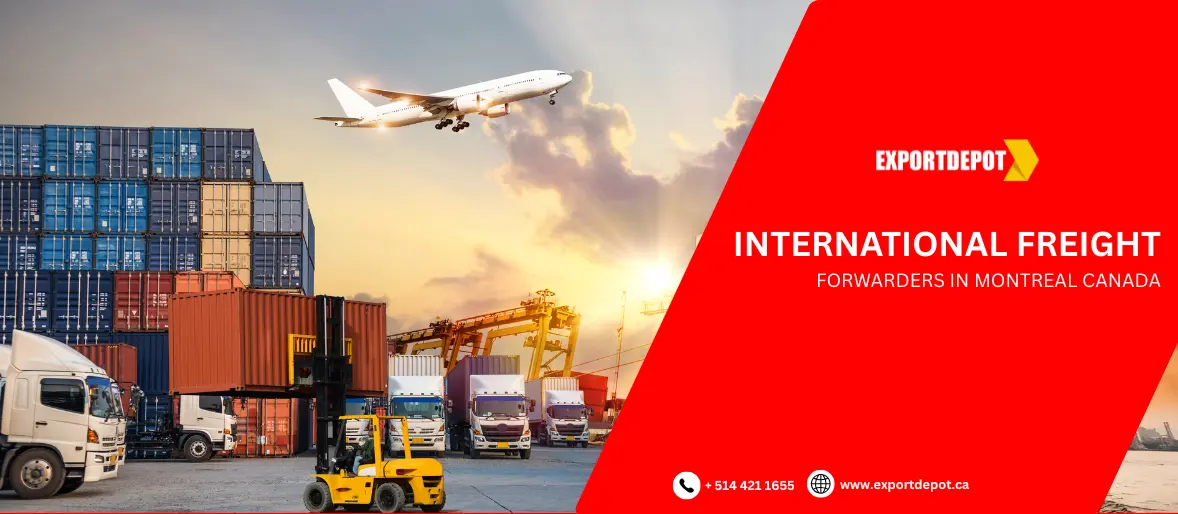
The Role of International Freight Forwarders in Montreal Canada, in Handling Complex Shipments
The expansion of global trade has continued rapidly. With the growth of international supply chains, shipping has become more complex. Businesses now need to do more than just ship freight from point A to point B. They also need to manage multi-modal transport, meet compliance requirements and customs regulations, secure cargo insurance, and meet delivery deadlines. International freight forwarders in Montreal Canada, provide a critical service by assisting businesses in managing complex international shipments. The success of these shipments often depends on proper planning, communication between parties, and the knowledge. And the absence of which greatly increases the likelihood of delays, additional fees, penalties, and lost opportunities.
At Export Depot, we provide businesses with professional logistical assistance in managing complex international freight-forwarding requirements. The following are ways international freight forwarders in Montreal Canada, help make complex international shipments easier.
Why Montreal Is a Strategic Center for International Freight?
Montreal is a top-logistics city in Canada. It has a strong transport system with ocean, rail, truck, and plane, so forwarders can provide clients with timely solutions. And since it is in North America, it is a major transport hub for international commerce between Europe and Asia, as well as between the U.S. and other parts of North America.
Montreal’s geographical advantages are only part of the equation for success in today’s logistics environment. A successful international shipping process will involve many parties, such as freight forwarders, several carriers, and customs authorities, and multiple shipments. Because of the number and complexity of these factors, many companies use international freight forwarders in Montreal Canada for their expertise.
What Makes a Shipment Complex in International Logistics?
Not every shipment requires advanced coordination. However, many international deliveries pose challenges that standard overseas shipping services cannot handle.
Complex shipments often include:
- Multi-country routing
- Specialized cargo handling
- Strict delivery deadlines
- Regulatory restrictions
- Temperature control requirements
- High-value or oversized goods
- Multi-modal transport coordination
When shipments involve several of these factors simultaneously, the risk of disruption increases significantly. Freight forwarders step in to manage every stage of the process.
How International Freight Forwarders in Montreal Canada Make Complex Shipments Easier?
1. Strategic Planning and Route Optimization
Complex shipping begins with planning. Freight forwarders evaluate cargo characteristics, destination requirements, and timeline expectations. Then they design efficient transport routes.
This planning process includes:
- Selecting the best transport combination
- Comparing transit time and cost
- Identifying potential risks
- Coordinating transfer points
- Preparing contingency plans
Businesses engaged in international shipping typically need seamless coordination across modes of exportation. Freight forwarders will ensure that all changes proceed smoothly and without interruption.
2. Documentation and Compliance Management
International shipping involves extensive paperwork. Even minor documentation errors can cause major delays or financial penalties.
Freight forwarders manage critical documentation such as:
- Bills of lading
- Commercial invoices
- Packing lists
- Customs declarations
- Import permits
- export licenses
They also stay up to date on changing regulations across different countries. This expertise ensures compliance at every stage of transit.
Documentation management alone is reason enough to work with experienced international freight forwarders in Montreal Canada.
3. Coordinating Multi-Modal Transportation
Complex shipments rarely rely on a single transport method. Instead, they often move through multiple transportation modes.
These may include:
- Truck transport from the origin warehouse
- Rail transfer to pothe rt terminal
- Ocean freight to an international destination
- Regional distribution by truck or air
Freight forwarders coordinate these transitions carefully. Timing must align perfectly to avoid storage fees or missed connections.
Businesses using international shipping, especially international shipping LCL Montreal, benefit from coordinated scheduling. Consolidated shipments require precise timing to merge cargo from multiple sources into shared containers.
5. Risk Management and Insurance Coordination
There are risks associated with international shipping. This includes but not limited to weather disruptions, port congestion, and cargo-handling accidents, which may delay your deliveries.
Freight forwarders will identify the risks and put a plan in place to reduce or prevent them. They also arrange appropriate insurance coverage based on cargo value and route complexity.
Risk management includes:
- Shipment tracking
- Contingency routing
- Damage prevention measures
- Claims assistance
This proactive approach protects both cargo and business operations.
6. Real-Time Visibility and Communication
Today’s modern logistics relies heavily on transparent operations. Companies must have access to accurate information about their shipments, including their current status and expected arrival time.
Expert Freight Forwarders offer:
- Real-time tracking systems
- Status updates
- Milestone notifications
- Proactive communication
This visibility improves planning and reduces uncertainty across supply chains.
7. Customs Clearance Expertise
International shipping can be difficult to navigate because customs clearance can be complex. They all have their own ways of doing business. This includes inspection processes, and there can also be large fluctuations in tariffs.
Customs officials and freight forwarders collaborate during transport to facilitate rapid customs clearance. This keeps the supply chain running smoothly and on time.
8. Handling Specialized Cargo Requirements
Some cargo requires extra care. Freight forwarders arrange specialized equipment and handling procedures when necessary.
Examples include:
- Temperature-controlled shipments
- Oversized machinery
- Fragile goods
- Hazardous materials
Professional management ensures that sensitive cargo arrives safely and complies with all regulatory requirements.
9. Long-Term Supply Chain Optimization
Freight forwarders do more than manage individual shipments. They help businesses optimize entire supply chains.
This may involve:
- Route analysis
- Cost reduction strategies
- Logistics planning
- Performance monitoring
Long-term optimization improves efficiency and supports sustainable growth.
FAQs
- What do international freight forwarders in Montreal Canada, actually do?
They coordinate transportation, documentation, customs clearance, and logistics planning for international shipments.
- Why are freight forwarders important for complex shipments?
Complex shipments involve multiple transport stages, regulations, and risks. Freight forwarders manage these elements to prevent delays and errors.
- Is LCL shipping suitable for small businesses?
Yes. International shipping LCL Montreal allows businesses to share container space and reduce costs.
- Do freight forwarders handle customs clearance?
Yes. They prepare documentation, coordinate inspections, and ensure regulatory compliance.
Final Thoughts
International trade will continue to be a rapidly expanding and increasingly complex industry that presents many challenges for companies. This includes diverse regulations, logistical challenges, and the need to deliver goods globally more quickly.
At Export Depot, we provide a complete range of logistics solutions to meet the needs of our customers’ most complex shipments. We will ensure that your shipment moves as smoothly as possible across international borders safely, efficiently, and on time.

Related posts
How International Freight Forwarders in Montreal Canada, Can Improve Supply Chain Efficiency?
Supply chain efficiency is critical for global trade. Delays, high costs, and po
What Makes Local Cargo Shipping Company Near Me the First Choice for Businesses?
In our current competitive business environment, speed, reliability, and cost co

International Shipping Services: Key Considerations When Exporting from Canada to Europe
Moving goods across continents is about more than simply putting goods into a co